What Is Dual Diagnosis, and Why Treating Both Matters

Many of the people we meet have been through treatment before, sometimes more than once, and relapsed, and concluded that they simply failed. Often, that's not what happened at all. What happened is that only half the problem got treated. That's what dual diagnosis care is built to fix.
What dual diagnosis means
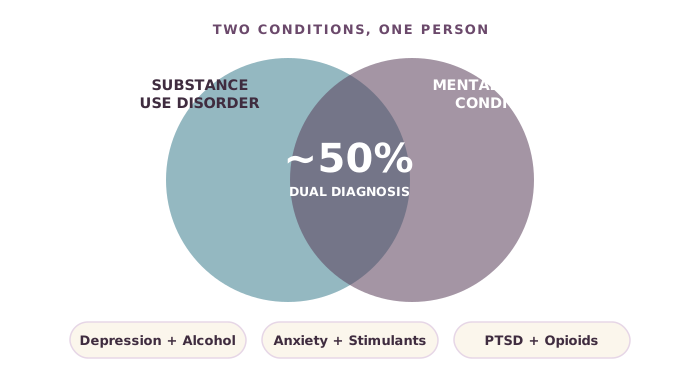
Dual diagnosis, also called co-occurring disorders, is when a person has both a substance use disorder and a mental health condition at the same time. Common pairings include depression with alcohol use, anxiety with stimulant use, or worsening depression driven by an opioid-like drug such as gas station heroin. It's extremely common: roughly half of people with a mental health disorder will experience a substance use disorder at some point, and vice versa.
Why the two feed each other
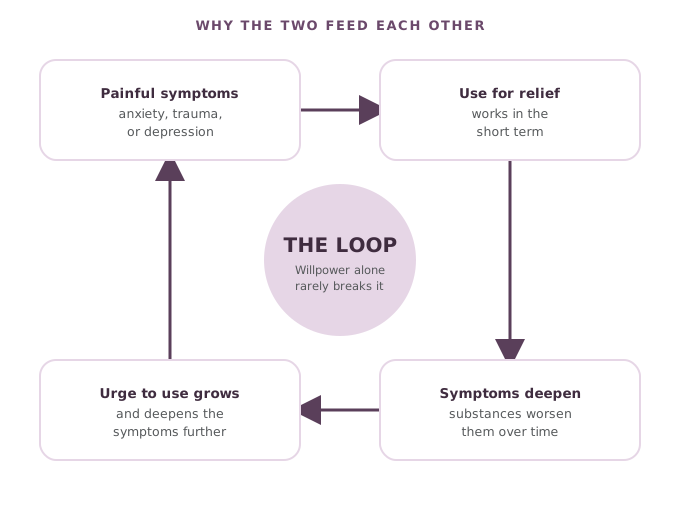
Addiction and mental health don't sit side by side politely. They fuel each other. People often drink or use to quiet anxiety, trauma, or depression, and in the short term it works. But substances deepen those very same symptoms over time, which increases the urge to use, which deepens the symptoms further. It's a loop, and willpower alone rarely breaks it.
Treat the whole picture
In-house psychiatry and physician-led care, together in one place.
Why treating one alone fails
If you treat the addiction but ignore the depression driving it, the depression is still there at discharge, and it goes looking for relief. If you treat the mental health but not the substance use, the using keeps undermining the progress. This is why people cycle in and out of programs that only address one side. Lasting recovery usually requires treating both at once, with one coordinated team.
What integrated treatment looks like
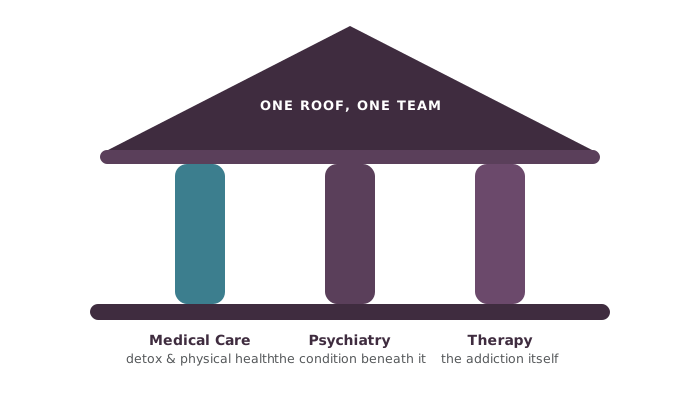
At Regain Hope Detox and Recovery Center, integrated care means the same physicians who manage your detox and medical care work alongside psychiatry and therapy, so nothing falls through the cracks. Because we're physician-owned with in-house psychiatry, we can treat the addiction, the mental health beneath it, and the physical health addiction so often erodes, all under one roof.
If you've relapsed before, it may not be because you didn't try hard enough. It may be that the whole problem was never treated at once. That's a fixable thing, and it starts with one confidential conversation.
Sources
- Substance Abuse and Mental Health Services Administration (SAMHSA): co-occurring disorders.
- National Institute on Drug Abuse (NIDA): comorbidity of substance use and mental illness.