Naltrexone for Alcohol Use Disorder: What to Know
Alcohol withdrawal can be uncomfortable. It's what happens when someone who has been drinking heavily for a long time suddenly stops or cuts back, and the body reacts to the absence of alcohol. Withdrawal affects a large share of people with an alcohol use disorder (AUD) when they stop or reduce their drinking, and in some cases it can become severe or even dangerous, which is why medical supervision matters.
Medication is one part of modern AUD care. Some medications help manage the acute withdrawal phase, while others are used afterward to support long-term recovery. Naltrexone belongs to the second group: it helps reduce cravings and the risk of returning to heavy drinking, but it is not a treatment for the acute symptoms of alcohol withdrawal.
This article explains clearly what naltrexone is and what role it plays in recovery from alcohol addiction.
What Is Naltrexone?
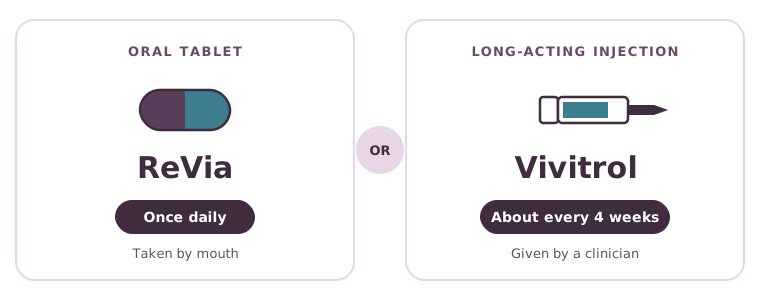
Naltrexone is an FDA-approved medication that works as an opioid antagonist. It is used to treat both alcohol use disorder and opioid use disorder, including addiction that starts with a legitimate pain medication prescription. It comes in two forms:
- An oral tablet (brand name ReVia), usually taken once daily.
- A long-acting injection (brand name Vivitrol), given about once every four weeks by a clinician.
Naltrexone is one element of treatment, not a stand-alone cure. It works best alongside counseling, therapy, and other supports as part of a comprehensive care plan. It is not approved for use in children, and whether it is right for you depends on your full medical history—so the decision should always be made with a clinician.
Naltrexone is one of the most effective medications available for AUD, yet it remains underused. Research has shown that only a small fraction of people treated for alcohol use disorder actually receive it, though prescribing has been rising over time.
Physician-led MAT & detox
Two physicians on-site daily. We verify your insurance for free.
How Does Naltrexone Work?
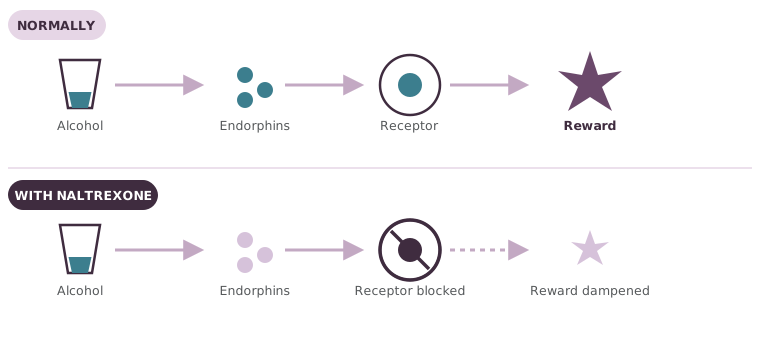
Naltrexone binds to opioid receptors in the brain—the same receptor system involved in opioid overdoses, including from unapproved opioid-like drugs such as gas station heroin. Normally, drinking alcohol triggers the release of the body's own feel-good chemicals (endorphins), which act on these receptors and produce part of alcohol's rewarding “buzz.” By blocking those receptors, naltrexone dampens that reward. Over time, this helps reduce cravings and makes it easier to avoid returning to heavy drinking.
An important point that is often misunderstood: for alcohol use disorder, you do not have to complete detox or be completely alcohol-free before starting naltrexone. It can be started even while a person is still drinking. (This is different from opioid use—see the safety section below.)
For most people, naltrexone is taken as a 50 mg tablet once a day, or given as a monthly injection. Treatment is individualized: many people take it for at least several months, and it can be continued as long as it is helping. Naltrexone is not addictive and does not cause its own withdrawal symptoms when stopped.
Important Safety Information
The most important safety point: naltrexone cannot be used if you are currently taking opioids (prescription pain medications, methadone, buprenorphine, heroin, etc.). Because naltrexone blocks opioid receptors, taking it while opioids are in your system can trigger sudden, severe opioid withdrawal. Most programs require being opioid-free for a period of time before starting, and you should tell your clinician about all medications you take.
Naltrexone should also be avoided in people with acute hepatitis or liver failure, and your clinician may check liver function before and during treatment.
Does Naltrexone Have Side Effects?
Like any medication, naltrexone can cause side effects. The most common are usually mild and often improve over time:
- Nausea
- Headache
- Drowsiness or trouble sleeping
- Reduced appetite
- Vomiting
- Muscle or joint aches
- Dizziness
More serious effects are uncommon. Injectable naltrexone can cause reactions at the injection site.
Naltrexone does not cause a violent physical reaction if you drink alcohol while taking it (unlike disulfiram). But that does not make the combination safe. Naltrexone blocks the pleasurable effects of alcohol—it does not lower your blood alcohol level or make you less impaired—so drinking while on it still carries all the usual risks.
How Effective Is Naltrexone?
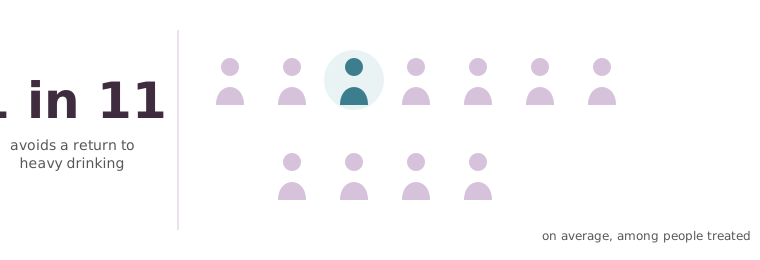
Naltrexone is one of the first-line, evidence-based medications for AUD, and multiple high-quality studies support its use. The benefit is real but moderate: on average, naltrexone lowers the chance of returning to heavy drinking, and roughly one in eleven people treated avoids a return to heavy drinking who otherwise would not have. It works best when combined with counseling and ongoing support.
Several factors can influence how well it works:
Your relationship with alcohol. Some research suggests naltrexone works especially well for people who drink for alcohol's rewarding effects and who report strong cravings.
Genetics. A family history of alcoholism has been linked to a better response to naltrexone in some studies. Genetic testing to predict response is still being researched and is not yet a routine part of care.
Consistency and support. Taking the medication as prescribed and pairing it with therapy improves outcomes. The monthly injection can help people who find a daily pill hard to keep up with.
If naltrexone isn't the right fit, other approved medications—such as acamprosate or disulfiram—may be options to discuss with your clinician.
Medication for AUD vs. Naltrexone Specifically
Medication for alcohol use disorder is a broad category: it includes medicines used during withdrawal to keep people safe and comfortable, and medicines used afterward to support lasting recovery. Naltrexone, acamprosate, and disulfiram are the main FDA-approved options for the recovery phase.
Naltrexone's role is to reduce cravings and the pull toward heavy drinking. It is not a treatment for the acute withdrawal phase itself. As part of an integrated plan, it can help you stay in control, rebuild a healthier relationship with alcohol, and move forward in recovery with greater confidence.
Begin Healing at Regain Hope Detox, Burbank, California
We're a physician-led detox and residential center, and we help you overcome alcohol addiction one day at a time. Our medically supervised programs support you through withdrawal in a calm, alcohol-free space, and into lasting recovery.
In our residential program, you stay at our center and receive evidence-based therapies, medication for AUD including naltrexone when appropriate, and the tools to rebuild a healthy sense of yourself. Every treatment plan is tailored to you, factoring in your circumstances and medical history, and delivered by our certified, on-site clinicians. We monitor you 24/7 to ensure your safety and progress.
We work with both individuals and couples, and our care is available in English, Spanish, and Korean.
Hope is within reach. Regain yours today—contact our admissions team.
This article is intended for educational purposes only and should not replace personalized medical advice. If you believe you or someone else is experiencing a medical emergency, call 911 immediately.
Sources
- National Institute on Alcohol Abuse and Alcoholism. (August 2025). Alcohol Use in the United States: Age Groups and Demographic Characteristics. niaaa.nih.gov.
- Qeadan, F. et al. (August 2021). Trends in the Use of Naltrexone for Addiction Treatment among Alcohol Use Disorder Admissions in U.S. Substance Use Treatment Facilities. International Journal of Environmental Research and Public Health.
- SAMHSA. (December 2025). Naltrexone. samhsa.gov.
- Kumar, R. et al. (July 2024). Naltrexone and its Effects on Craving and Alcohol Use among Patients with Alcohol Dependence Syndromes: A Report. Addiction & Health.
- Krishnan-Sarin, S. et al. (September 2007). Family history of alcoholism influences naltrexone-induced reduction in alcohol drinking. Biological Psychiatry.
- Bouza, C. et al. (July 2004). Efficacy and safety of naltrexone and acamprosate in the treatment of alcohol dependence: a systematic review. Addiction.
- Oslin, D. et al. (August 2003). A functional polymorphism of the mu-opioid receptor gene is associated with naltrexone response in alcohol-dependent patients. Neuropsychopharmacology.