How To Stop Anxiety After Drinking Alcohol
Drinking and anxiety have a cyclical relationship. Many people consume alcohol in an attempt to mask anxiety, but the next day, feel more anxious because of drinking. There's even a colloquial term for it: hangxiety (hangover + anxiety).
Alcohol affects your brain chemistry, and after just one or two drinks, you're more likely to feel anxious afterward. People who have existing mental health conditions are more likely to be impacted and more severely.
The best way to avoid stress, low mood, or worrying after drinking is to not drink alcohol. It also helps to understand how alcohol impacts your internal systems, and what factors make alcohol-induced anxiety more intense.
Why Does Alcohol Make Me Feel Anxious the Next Day?
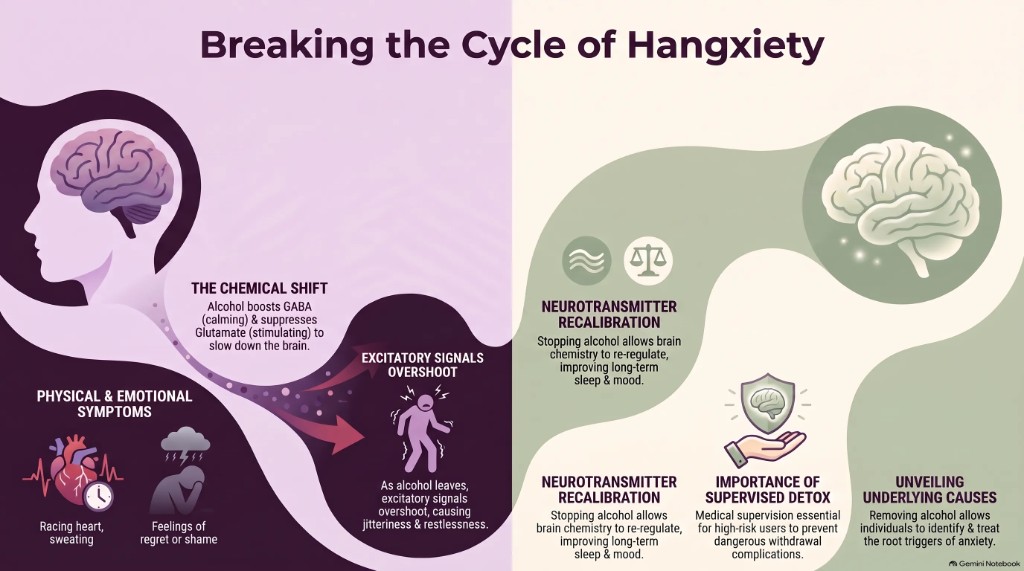
Alcohol is a depressant, which means it slows down processes in your brain and your central nervous system. It does so by increasing the volume of a neurotransmitter called gamma-aminobutyric acid (GABA), making you feel calm and uninhibited. At the same time, it decreases glutamate, slowing down your thoughts.
These changes initially make you feel good while drinking. But, as you metabolize alcohol, your body has to work hard to restore the balance it had before you drank. You start to become more alert again, and this is when anxiety surfaces. Alcohol also dehydrates you, disrupts your sleep, and causes low blood sugar, which all contribute to your depleted state and anxiety.
Anxiety after drinking alcohol can include:
- Faster heartbeat
- Shortness of breath
- Agitation
- Sweating
- Problems concentrating
- Feeling regret, shame, or sadness
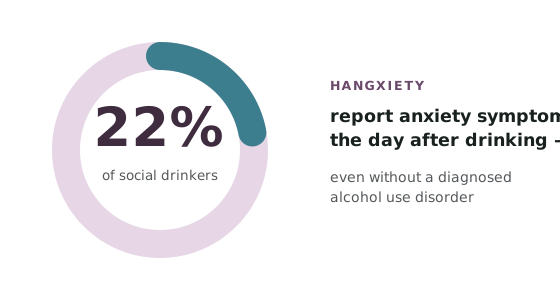
Among people who drink socially and who don't meet criteria for alcohol use disorder (AUD), 22% experience hangxiety symptoms.
Anxiety and alcohol, treated together
Physician-led dual diagnosis care. We verify your insurance for free.
How Can I Stop Alcohol-Induced Anxiety?
The only way to stop anxiety after drinking alcohol is to not drink alcohol. For people who consume alcohol casually, have no dependency on alcohol or any mental health disorders, stopping abruptly may be a safe option.
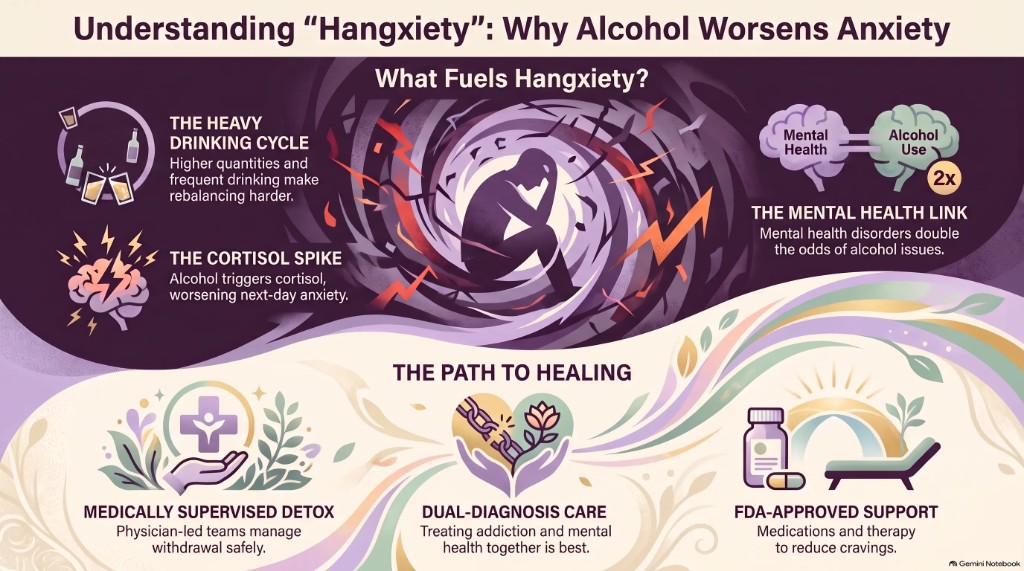
Anyone with AUD or a co-occurring mental health disorder should stop drinking only under medical supervision, since withdrawal can be dangerous without it. Supervised detox programs ensure that you are safe, monitored, and gradually taper off alcohol at a pace that supports your physical and mental wellbeing. It protects you from potentially life-threatening withdrawal symptoms such as delirium tremens (DT) and seizures, plus lowers the risk of relapse, contributing to longer-term recovery.
Stopping or slowly reducing your alcohol intake allows neurotransmitters to regulate and restore your brain's chemical balance. This recalibration lowers anxiety, as well as leads to better sleep and mood.
It's equally beneficial to address the underlying causes of anxiety. Whether you have general anxiety or an anxiety disorder, without alcohol as a veil over anxiety, you can more effectively explore triggers and treatment for your feelings and responses.
In a study of people in treatment for AUD, 45% said mental health reasons, including anxiety, drove their decision to quit alcohol.
What Factors Worsen Anxiety After Drinking Alcohol?
Being aware of the environmental and biological factors that exacerbate anxiety after drinking can help lower it. Keep in mind that adjusting these factors (where possible) won't completely prevent or stop anxiety.
These factors apply to people with and without preexisting mental health disorders:
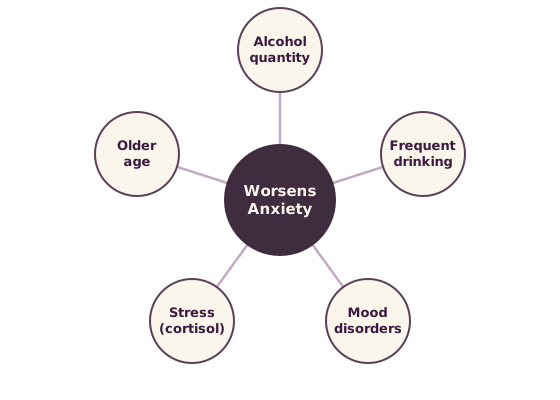
- Alcohol quantity. Higher volumes of alcohol make hangxiety worse.
- Drinking often. Frequent alcohol consumption makes it harder for the body to rebalance afterward.
- Mental health disorders and mood disorders. People with these disorders are more likely to feel anxiety, and to a greater degree, after drinking.
- Stress. Alcohol triggers the release of cortisol (the stress hormone), which can make existing stress worse.
- Older age. Aging slows the metabolism, meaning hangovers tend to be more intense and anxiety-filled.
The Link Between Alcohol, Anxiety, and Mental Health
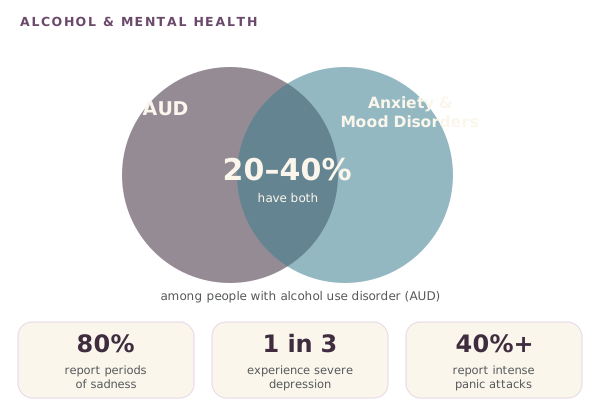
Many people who suffer from addiction are also prone to anxiety. Around 80% of people with AUD report periods of sadness, with 1 in 3 people experiencing severe depression. At least 40% also reported one or more intense panic attacks.
Often, people use alcohol to numb anxiety, but as the effects wear off, negative feelings come rushing back, usually seeming stronger than before. The problem is, as a person consumes more alcohol to ineffectively deal with anxiety, the more they build a tolerance to its depressant effects, which only leads to more drinking as they chase the sense of escape — and eventually more anxiety. Using alcohol this way, as an emotional crutch, is one of the quieter signs of a high functioning alcoholic, since it can continue for years without ever disrupting work or relationships.
Research shows that AUD is an increased risk for people with anxiety or mood disorders. Meanwhile, 20-40% of people with a mental health disorder already have AUD.
Stopping alcohol-induced anxiety calls for a closer look at mental health and damaging behaviors around alcohol consumption. The two are both detrimental and reinforcing of one another. By treating them together, and identifying the circumstances that fuel them, anxiety, addiction, and deeper challenges can heal. That's what dual diagnosis treatment is designed for.
Healing Starts at Regain Hope Detox, Burbank, California
If you're struggling with alcohol addiction and mental health, our physician-led team at Regain Hope Detox provides compassionate, evidence-based care to help you recover.
Our medically supervised programs support you as you withdraw from alcohol, manage symptoms, and identify the drivers of addiction. Our programs include detox and residential treatment, and we also have medication-assisted treatment (MAT) available. Our dual diagnosis program is designed for anyone with an addiction and co-occurring mental health disorder.
We tailor all care to you, factoring in your circumstance and medical history. We work with both individuals and couples, serving people in Burbank, Los Angeles County, and Southern California. Our care is available in English, Spanish, and Korean.
Hope is within reach. Regain yours today. Contact our admissions team.
This article is intended for educational purposes only and should not replace personalized medical advice. If you believe you or someone else is experiencing a medical emergency, call 911 immediately.
Sources
- University of Minnesota. (2023). People with anxiety and mood disorders more likely to experience alcohol use disorder symptoms than others who drink at the same level. med.umn.edu.
- van Schrojenstein Lantman, M. et al. (2017). The impact of alcohol hangover symptoms on cognitive and physical functioning, and mood. Human Psychopharmacology.
- Prestigiacomo, C. et al. (2024). A systematic review of the reasons for quitting and/or reducing alcohol among those who have received alcohol use disorder treatment. Drug and Alcohol Dependence Reports.
- Schuckit, M. (1996). Alcohol, Anxiety, and Depressive Disorders. Alcohol Health and Research World.
- Anker, J. et al. (2023). Evidence for an alcohol-related "harm paradox" in individuals with internalizing disorders: Test and replication in two independent community samples. Alcohol Clinical & Experimental Research.