Dab Drug: What Is It and Is It Dangerous?

Drugs, the names of drugs, and how drugs are used are constantly changing. It's not only hard to keep up with the terminology, but also to understand the new risks that come with evolving drug culture.
"Dabbing," for example, is a way of consuming marijuana in a concentrated form. "Dabs" are the concentrated wax or oil made for dabbing. The dabbing method isn't new, but using it for marijuana has become popular in the last decade.
For people with or without an existing addiction, dabbing can be dangerous. In this article, I explain why, and when medical intervention is necessary.
What Are Dabs?
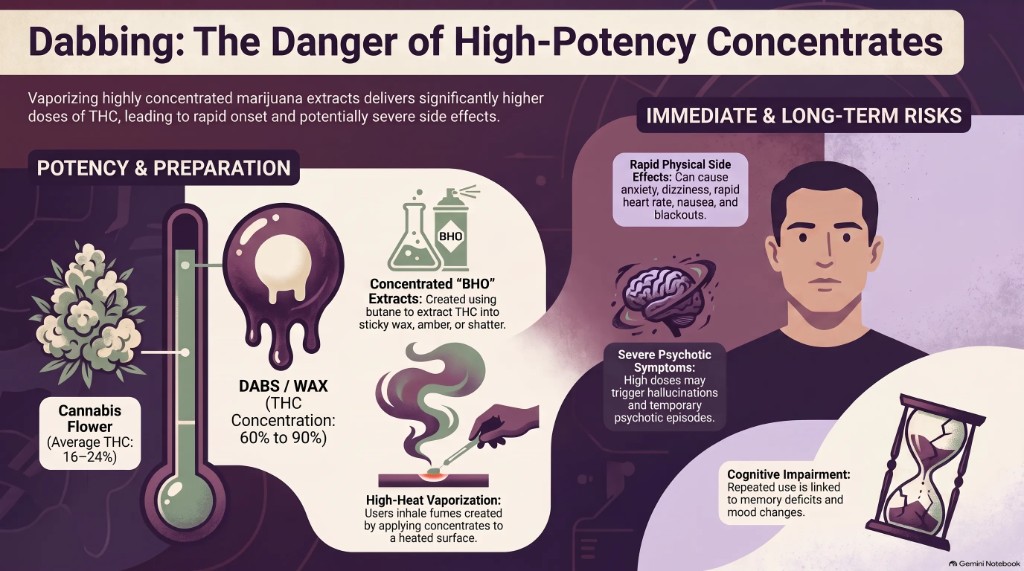
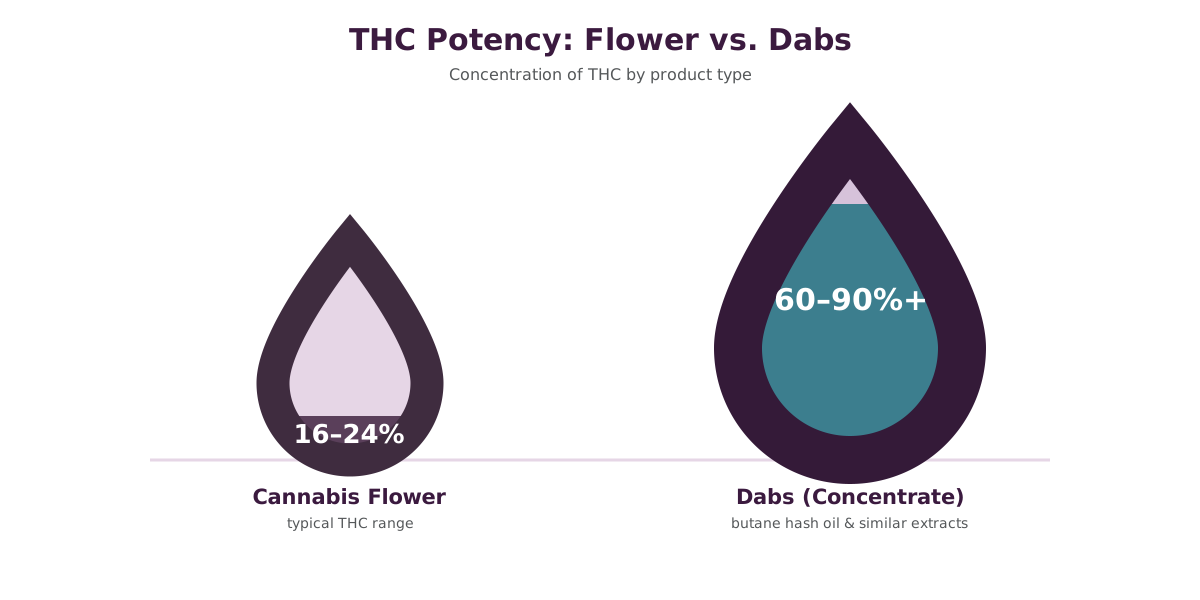
Dabs are highly concentrated forms of marijuana that often look like sticky brown clumps of wax. Dabs contain high levels of tetrahydrocannabinol (THC), the compound that causes the sensation of being high. THC concentration in dabs can range from 60% to over 90% — far higher than the roughly 16–24% found in cannabis flower [1].
Dabs can be made at home or in commercial labs. One of the most common preparation techniques uses butane to extract THC from dried marijuana. This process makes butane hash oil (BHO), which has much stronger effects than conventional cannabis flower [2]. Other names for dabs include glass, black glass, wax, amber, and shatter.
Dabbing is when a person vaporizes marijuana concentrates or extracts on a hot surface and inhales the fumes.
Public health agencies, including the CDC, list dabbing as one of the common ways cannabis is used [3]. It's especially popular among teens and young adults in the U.S., as well as some people who use marijuana for medicinal purposes [4]. The legalization of medical and recreational cannabis in several states has corresponded with a rise in dabbing [5].
What Are the Side Effects of Dabbing?
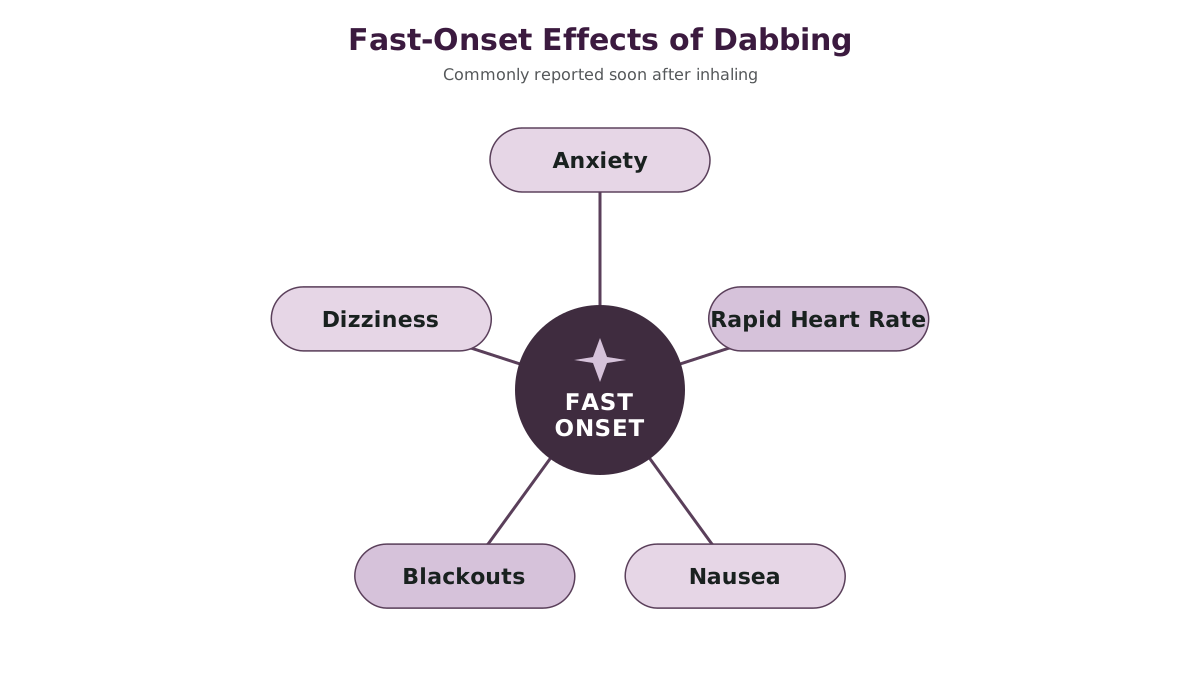
Dabbing causes a strong and fast high. People report feeling euphoric and relaxed, with heightened senses and racing thoughts soon after inhaling.
Other side effects can also onset quickly and include:
- Anxiety
- Dizziness
- Rapid heart rate
- Blackouts
- Nausea
In severe cases — often related to the very high dose of THC delivered — people have experienced hallucinations and temporary psychotic symptoms. Repeat use can also lead to short-term attention deficits, memory impairment, and mood changes [2].
Concerned about cannabis use?
Physician-led care for cannabis use disorder. We verify your insurance for free.
Long-Term Health Risks of Dabbing
Dabbing carries many of the same long-term risks as smoking or vaping cannabis, plus some of its own.
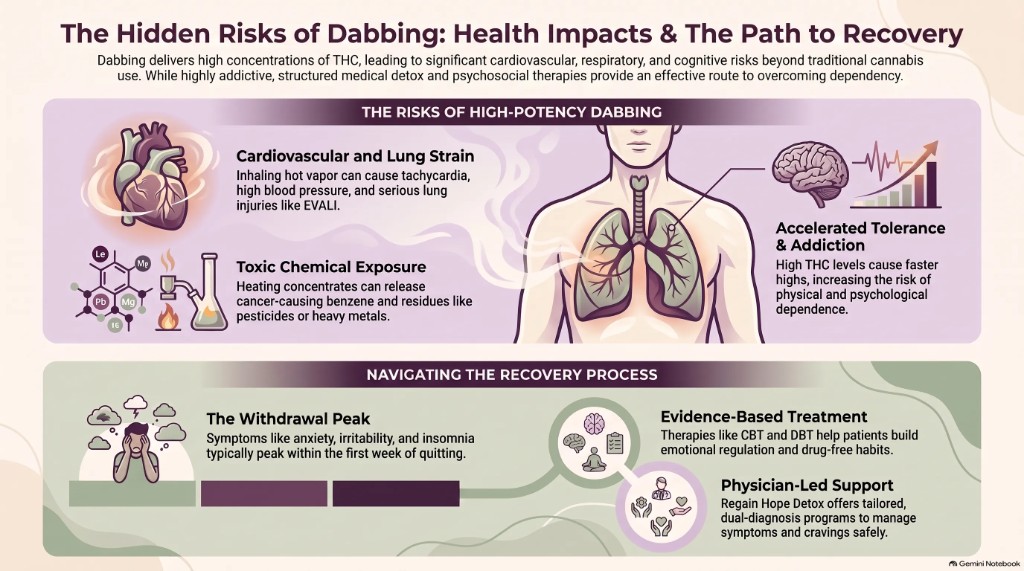
Inhaling hot vapor can provoke a cardiovascular response, causing tachycardia (fast heart rate) and increased blood pressure. It can also cause a persistent cough, chest pain, and lung injury [6]. Of particular concern is EVALI (e-cigarette or vaping product use-associated lung injury), a serious and sometimes life-threatening condition strongly linked to THC-containing vaping products and certain additives such as vitamin E acetate.
Research shows that heating cannabis concentrates — especially the terpenes they contain — can generate harmful and potentially cancer-causing compounds such as benzene [7]. Importantly, some studies suggest the levels of these gas-phase toxicants may be lower with dabbing or vaporizing than with smoking cannabis; the long-term cancer risk of dabbing specifically is not yet well defined.
Because dabbing delivers much more THC than smoking, there is concern about effects on thinking and memory [8]. The evidence here is mixed: while concentrate users reach higher peak blood-THC levels, studies directly comparing concentrate users to flower users have not consistently shown greater cognitive impairment, possibly because people self-adjust how much they use. More research is needed.
Many long-term risks are also hard to measure because dabs are not consistently regulated. THC concentration can vary widely, and products can be contaminated during production. Studies of cannabis concentrates have found solvents, pesticides, heavy metals, and mold — and concentrates fail contaminant testing more often than flower [9].
Are Dabs Addictive?
Yes, dabs can be addictive. They contain THC, which has psychoactive properties and affects the brain's dopamine (reward) system. Because dabbing produces a stronger and faster high than other forms of cannabis, it may raise the potential to build tolerance and physical and psychological dependence.
Not everyone who dabs will develop an addiction, but frequent use, higher doses, higher-potency products, and a personal history of addiction all make it more likely. Cannabis use disorder (CUD) is a possible outcome of dabbing, and studies suggest CUD is common among people who primarily use concentrates.
Withdrawal from Dabbing
If someone has CUD, stopping or cutting back on marijuana can cause withdrawal. Symptoms include:
- Anxiety
- Irritability
- Problems sleeping
- Aggression
- Low mood
- Loss of appetite
- Chills
- Headaches
- Sweating
- Digestive issues
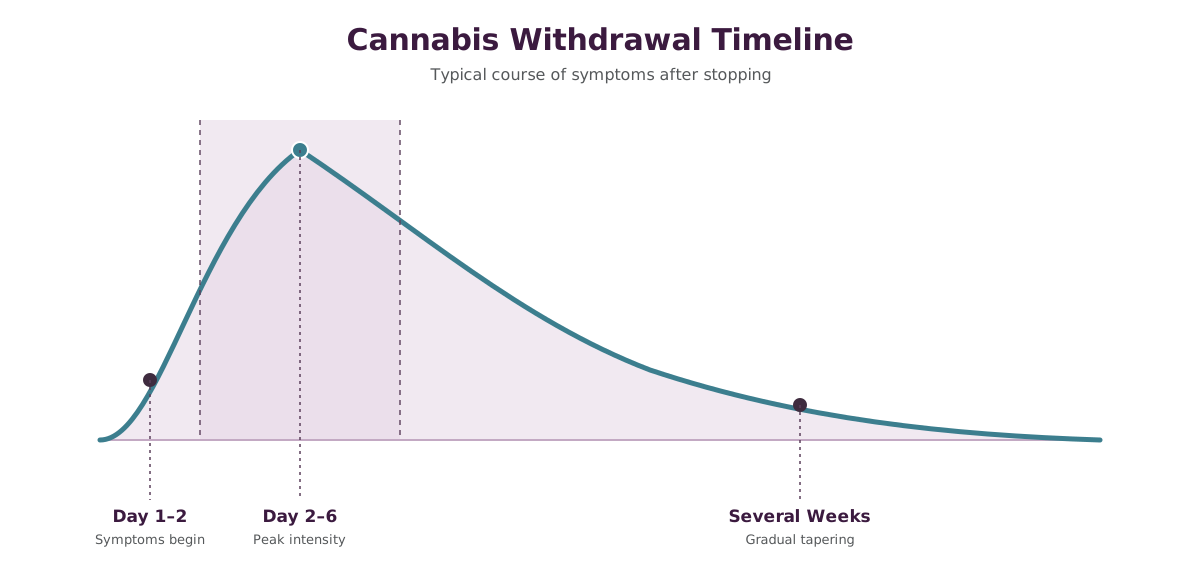
These symptoms aren't life-threatening. They typically begin 1–2 days after a person stops or lowers their cannabis intake, peak within the first several days (roughly days 2–6), and can last for several weeks depending on how long and how often the person has been using.
People with a mood disorder, personality disorder, or post-traumatic stress disorder (PTSD) may experience more severe withdrawal.
Treatment programs are available and effective for cannabis addiction and withdrawal. The mainstay of treatment is psychosocial therapy — especially Cognitive Behavioral Therapy (CBT) and motivational approaches, with Dialectical Behavior Therapy (DBT) also used. Through these, patients learn healthier thinking patterns, emotional regulation, and new habits that support a drug-free life. No medication is currently FDA-approved specifically for CUD; medications may sometimes be used off-label to ease particular symptoms. For a closer look at what medically supervised withdrawal from cannabis involves day to day, see our guide on how to detox from weed.
Regain Your Health at Regain Hope Detox, Burbank, California
If you or someone you love is struggling with cannabis addiction, our physician-led team at Regain Hope Detox provides compassionate, evidence-based care to help you recover.
Our residential treatment program supports you as you withdraw from cannabis, manage your symptoms, and identify the drivers of addiction. When appropriate, medications may be used off-label to help ease cravings and withdrawal symptoms as part of a broader treatment plan. Our dual diagnosis program is designed for anyone with an addiction and a co-occurring mental health disorder.
We tailor all care to you, factoring in your circumstances and medical history. We work with both individuals and couples, serving people in Burbank, Los Angeles County, and Southern California. Our care is available in English, Spanish, and Korean.
Hope is within reach. Regain yours today. Contact our admissions team.
This article is intended for educational purposes only and should not replace personalized medical advice. If you believe you or someone else is experiencing a medical emergency, call 911 immediately.
Sources
- Partnership to End Addiction. (December 2023). What Is Dabbing? drugfree.org.
- Frances Mullins, M. (April 2021). Cannabis dabbing. Nursing.
- CDC. (February 2024). About Cannabis. cdc.gov.
- Loflin, M. Earleywine, M. (October 2014). A new method of cannabis ingestion: The dangers of dabs? Addictive Behaviors.
- Meacham, M. et al. (July 2018). Understanding emerging forms of cannabis use through an online cannabis community: An analysis of relative post volume and subjective highness ratings. Drug and Alcohol Dependence.
- Stephens, D. et al. (February 2020). Cannabis Butane Hash Oil Dabbing Induced Lung Injury Mimicking Atypical Pneumonia. Cureus.
- Meehan-Atrash, J. et al. (September 2017). Toxicant Formation in Dabbing: The Terpene Story. ACS Omega.
- Oke, O. (October 2025). The effect of cannabis use on cognitive decline in a geriatric population. The American Journal of Geriatric Psychiatry.
- Raber, J. et al. (2015). Understanding dabs: contamination concerns of cannabis concentrates and cannabinoid transfer during the act of dabbing. The Journal of Toxicological Sciences.