What Is a High Functioning Alcoholic?
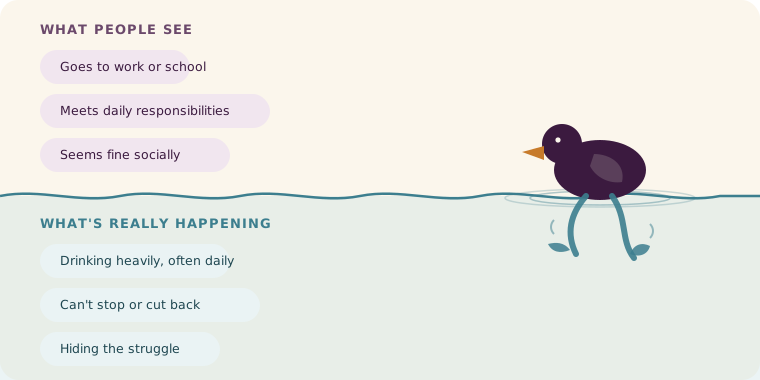
Alcoholism doesn't only look like someone slumped at a bar, ordering another drink while everyone around them asks them to stop. Addiction takes many forms, and one of the most easily missed is the quiet form, where a person keeps going to work, performing well, meeting daily responsibilities, and seeming like themselves in social settings.
A high functioning alcoholic moves through the world like a “normal” person. But underneath that presentation, they are struggling. It's like a duck gliding across a pond: calm and composed on the surface, while below the water they are paddling hard just to stay afloat.
“High functioning” is not a clinical diagnosis, but the term is widely used to describe someone who doesn't appear impaired by their drinking. In fact, it can look as though they don't have a problem at all. In this article, I explain what high functioning alcoholism looks like, its unique risks, and how treatment helps.
High Functioning Alcoholism Explained
A high functioning alcoholic is someone who meets the criteria for an alcohol use disorder (AUD) yet continues to work or study, maintain relationships, and socialize without obvious disruption, all while drinking regularly and often heavily.
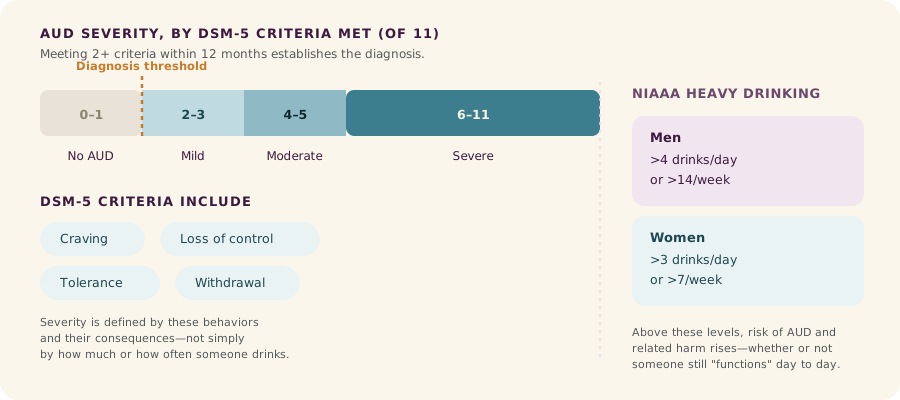
AUD is a medical condition diagnosed using the Diagnostic and Statistical Manual of Mental Disorders (DSM-5), which lists 11 criteria; meeting 2 or more within a 12 month period establishes the diagnosis, and the number of criteria determines whether it is mild, moderate, or severe. These criteria are based on drinking behavior and its consequences, such as craving, loss of control, tolerance, and withdrawal, not simply on how much a person drinks.
The National Institute on Alcohol Abuse and Alcoholism (NIAAA) defines heavy drinking for men as more than 4 drinks on any day or more than 14 drinks per week, and for women as more than 3 drinks on any day or more than 7 drinks per week.
High functioning alcoholics keep drinking despite the potential harm to their health and their lives. Many have not yet experienced severe consequences, which is part of why they can maintain their productivity and their outward sense of control. They may not realize, or may deny, that a problem exists. The people around them often don't see it either, because the person appears so capable in so many areas of life.
AUD is common: recent U.S. surveys estimate that more than 28 million people aged 12 and older meet criteria in a given year, and adult prevalence estimates range from roughly 11% to 14%. What proportion of these individuals are “high functioning” is not well established in the scientific literature; commonly cited figures come from popular sources rather than rigorous studies.
Physician-led detox & MAT
Two physicians on-site daily. We verify your insurance for free.
Signs of High Functioning Alcoholism
High functioning alcoholism can be hard to detect, but subtle signs point toward a problem. Pay attention to:
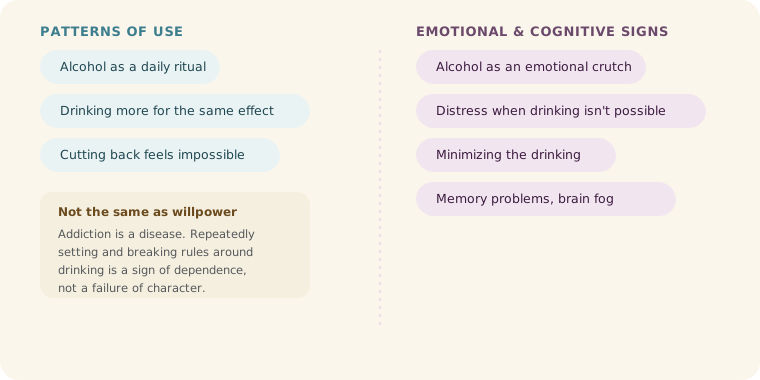
- Alcohol as a daily ritual. A drink at lunch every day, a third glass of wine each evening, or making plans that revolve around drinking. An automatic sense of needing, not just wanting, a drink is a red flag that alcohol use is out of hand.
- Drinking more to feel the same effect. Rising tolerance means the amount consumed has to climb over time. As the brain adapts to alcohol's constant presence, ordinary tasks start to feel harder without it.
- Alcohol as an emotional crutch. Drinking to unwind after a stressful meeting, to take the edge off anxiety, or to dull strong emotions changes a person's relationship with alcohol. It becomes a coping mechanism for uncomfortable feelings rather than something pleasurable.
- Distress when drinking isn't possible. Becoming irritable, restless, or physically unwell when alcohol isn't available can signal that dependence is present. It's easy to explain these feelings away, but combined with cravings they are essentially withdrawal symptoms.
- Minimizing the drinking. Hiding empty bottles, drinking at the bar so others at the table don't notice, or insisting “I didn't have that much” are all forms of denial.
- Cutting back feels impossible. Setting rules to limit drinking and repeatedly breaking them, or trying to quit and being unable to. Addiction is a disease, not a failure of willpower—changing habits around alcohol is genuinely hard.
- Cognitive changes. Memory problems, brain fog, and difficulty making decisions can reflect the effects of heavy drinking on the brain, even in people who otherwise feel fine—the same disruption behind an alcohol-induced blackout.
The Unique Risks of High Functioning Alcoholism
AUD is widely undertreated: only a small fraction of people who could benefit, well under one in five over a lifetime, ever receive treatment, and the share receiving medication is smaller still. Among high functioning alcoholics, who may not recognize the problem, that number is likely even lower.
High functioning alcoholism carries all the risks of AUD, plus the added toll of hiding or suppressing the problem. Functioning at a high level while drinking heavily is not sustainable, and over time it leaves people vulnerable to serious harm across nearly every organ system, including:
- Mental health conditions such as depression and anxiety, and increased suicide risk
- Liver disease, including cirrhosis
- Heart disease, high blood pressure, and cardiomyopathy
- Certain cancers
- Neurological damage and long term memory impairment
For many high functioning alcoholics, it is not until these effects surface that they confront the true extent of their drinking. But it doesn't have to reach that point. Recognizing and acknowledging the signs early makes it possible to seek treatment sooner and begin healing before the harm deepens.
Treatment for High Functioning Alcoholics
Medical detox, residential care, and outpatient programs are all structured, effective options for high functioning alcoholism. Each level combines evidence-based therapies, medication for alcohol use disorder (sometimes called medication assisted treatment, or MAT), and wellness support to help people withdraw safely, find stability, and address the underlying roots of addiction.
Medically supervised detox is often the first step. Because alcohol withdrawal can be dangerous, and in severe cases life-threatening, it should be managed by clinicians who can monitor and treat symptoms around the clock. Stepping away from work and daily distractions during this period can help high functioning alcoholics acknowledge their addiction and focus on recovery. During detox, patients are monitored continuously and receive medication when clinically appropriate to ease withdrawal and cravings.
Three medications—naltrexone, acamprosate, and disulfiram—are approved by the U.S. Food and Drug Administration to treat AUD, and are most effective when paired with counseling such as cognitive behavioral therapy, motivational enhancement, and peer support. Being able to function at a high level does not make someone immune to addiction. The right treatment ensures the whole person is seen and can begin to heal.
Begin Recovering at Regain Hope Detox, Burbank, CA
We're a physician led detox center helping people overcome alcohol addiction one day at a time. Our medically supervised program supports people as they withdraw from alcohol, providing a calm space to start the journey of recovery.
We also offer a residential program where individuals stay with us after completing detox, continuing to receive intensive care as they stabilize and prepare to return to daily life.
Our treatment is tailored to each person's medical history and circumstances, including whether they are considered high functioning. Care is delivered by certified clinicians who are on site at all times, and we monitor every participant 24/7 to ensure their safety and progress.
We offer medication for alcohol use disorder and treat co-occurring mental health conditions through our dual diagnosis program (learn why treating both together matters). We serve individuals and couples, and our care is available in English, Spanish, and Korean.
Hope is within reach. Regain yours today—contact our admissions team.
This article is intended for educational purposes only and should not replace personalized medical advice. If you believe you or someone else is experiencing a medical emergency, call 911 immediately.
Sources
- Krist, A. et al. (2025). Addressing Alcohol Use. The New England Journal of Medicine.
- U.S. Preventive Services Task Force. (2018). Unhealthy Alcohol Use in Adolescents and Adults: Screening and Behavioral Counseling Interventions. uspreventiveservicestaskforce.org.
- Kranzler, H. (2023). Overview of Alcohol Use Disorder. American Journal of Psychiatry.
- American Psychiatric Association. (2022). Diagnostic and Statistical Manual of Mental Disorders, Fifth Edition, Text Revision (DSM-5-TR). Psychiatry Online.
- Patel, A., Balasanova, A. (2021). Treatment of Alcohol Use Disorder. JAMA.