How to Detox From Weed

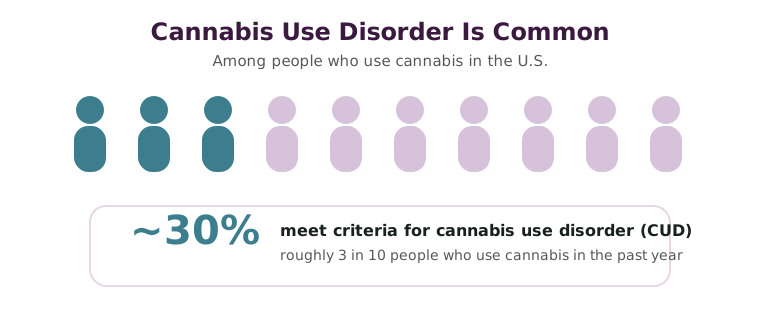
More than half of Americans have used weed at some point in their lives [1]. While many people smoke or ingest it recreationally or for medical purposes, weed is an addictive substance, and cannabis use disorder (CUD) can be a real consequence of using it. Around 3 in 10 people who use cannabis have CUD [2].
Weed addiction, like most addictions, can lead to withdrawal symptoms when use is suddenly stopped or dramatically lowered after a long period. Detoxing from weed not only helps a person safely remove weed from their system, but also helps them manage withdrawal and move forward into further treatment.
Let’s look at how to effectively detox from weed, and the structured support it requires.
What Is Cannabis Use Disorder?
CUD is a mental health condition and substance use disorder (SUD). People experiencing CUD cannot control cravings for cannabis or stop using despite the negative effects on their lives.
The condition applies to any product that comes from the cannabis sativa plant, including dried flowers, oils, gummies, and vapes. Most CUD, however, is tied to marijuana, which contains tetrahydrocannabinol (THC), the chemical compound that causes the “high” feeling.
Signs of CUD include:
- Cravings for cannabis
- Using more cannabis, and for more time, than intended
- Unsuccessfully cutting back or stopping cannabis use
- Spending time and money getting cannabis
- Spending time recovering from using cannabis
- Struggling at work, school, in relationships, and with other responsibilities because of cannabis use
- Giving up hobbies and activities you enjoy to use cannabis instead
- Needing higher doses of cannabis to achieve the same effects as before
- Experiencing withdrawal symptoms when stopping or lowering cannabis use
What Causes CUD?
There’s no single cause of CUD. It usually develops from a mix of factors. People in adolescence, and people with existing mental health conditions, are most vulnerable to developing it [3].
Common causes of CUD include:
- Biological: THC interacts with the brain’s reward system and drives reward-seeking behavior.
- Genetic: CUD can run in families; stress, social pressure, and easy access to cannabis all add to that inherited risk.
- Environmental: Trauma, especially childhood trauma, and socioeconomic hardship can also raise the risk.
- Psychiatric: CUD often co-occurs with depression, anxiety, PTSD, and bipolar disorder.
Physician-led cannabis detox
Physicians on-site daily. We verify your insurance for free.
What Are Weed Withdrawal Symptoms?
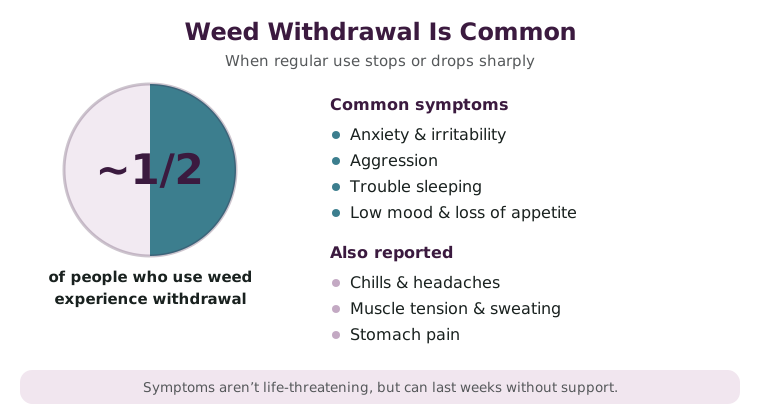
Around half of people who use weed experience withdrawal when they stop [4]. Withdrawal is what happens when the body has to adjust to the absence of weed.
Withdrawal symptoms include:
- Anxiety
- Irritability
- Aggression
- Trouble sleeping
- Low mood
- Loss of appetite
Other people report chills, headaches, tension, sweating, and stomach pain during withdrawal [4].
Can I Detox From Weed On My Own?
It’s possible to detox from weed at home alone, but it’s not recommended. Detoxing without support can bring risks that hinder recovery and put a person in danger:
- Withdrawal symptoms may persist for weeks and be hard to manage at home
- A person could hurt themselves while in a vulnerable state alone
- The mental health support that’s needed may not be immediately available
- The risk of relapse is higher when detoxing alone
Medical detox, on the other hand, provides a safe, regulated space to withdraw from weed. Treating an addiction requires working through the trauma that often lies beneath physical dependency, and medical detox offers a solid foundation for that work.
What Is Medical Detox for Weed?
Medical detox is a structured form of care for anyone removing addictive substances from their system. It involves staying at a health center under 24/7 supervision, where staff help manage cravings and withdrawal symptoms, and help people find stability without marijuana.
Anyone with CUD can attend medical detox, whether it’s their first time or they’ve tried before and weren’t able to finish. All medical detox programs are personalized, factoring in medical history, present needs, and goals for recovery.
Medical detox for weed is structured in three main parts:
- Assessment: The detox team conducts a physical and mental health evaluation.
- Stabilization: The person joins therapy and wellness activities and takes medications, when prescribed by the clinical team, to keep cravings and withdrawal symptoms in check [5].
- Preparation: The detox team recommends next steps—such as an outpatient program or weekly therapy—to maintain progress and abstain from cannabis.
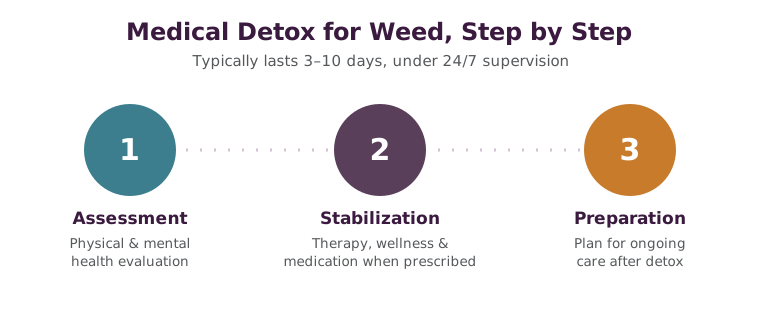
Medical detox lasts 3 to 10 days, on average. The duration depends on how much weed a person uses, how often, and whether they have other co-occurring disorders.
Unlike detoxing at home, medical detox combines evidence-based approaches such as Cognitive Behavioral Therapy (CBT) and Dialectical Behavior Therapy (DBT) with activities that build better emotional regulation and skills for a healthy, drug-free life. These therapies also help people examine the thoughts and behaviors that drive their relationship with weed.
Stability Is Closer Than You May Think at Regain Hope Detox, Burbank, CA
Our team of licensed clinicians at Regain Hope Detox provides expert, empathetic care to help anyone struggling with addiction.
Our residential detox program supports people to safely withdraw from cannabis. The program includes individual and group therapy sessions and wellness activities. We also have a dual diagnosis program designed for anyone experiencing addiction alongside a co-occurring mental health disorder.
We tailor all care to each person, and we work with both individuals and couples, serving people in Burbank, Los Angeles County, and Southern California. Our care is available in English, Spanish, and Korean.
Hope is within reach. Regain yours today—contact our admissions team.
Dr. Mileidys Gomez Gonzalez is a physician specializing in addiction medicine and medical detoxification. She serves as Medical Director of Regain Hope Detox and Recovery Center in Burbank, California.
This article is intended for educational purposes only and should not replace personalized medical advice. If you believe you or someone else is experiencing a medical emergency, call 911 immediately.
Sources
- National Center for Drug Abuse Statistics. (2025). Marijuana Addiction: Rates & Usage Statistics. drugabusestatistics.org.
- Hasin, D. et al. (2015). Prevalence of Marijuana Use Disorders in the United States Between 2001-2002 and 2012-2013. JAMA Psychiatry.
- Nimmana, B. et al. (2026). Cannabis Use Disorder. StatPearls.
- Connor, J. et al. (2022). Clinical management of cannabis withdrawal. Addiction.
- Weinstein, A., Gorelick, D. (2012). Pharmacological Treatment of Cannabis Dependence. Current Pharmaceutical Design.