Signs of Pain Medication Addiction: What to Know

Addiction to pain medication can be slow, quiet, and unexpected. For many people, the idea of becoming dependent on pain medication seems unlikely because it's a legal substance that comes from a licensed provider. But pain medication addiction is real, and it can be dangerous precisely because it hides in plain sight.
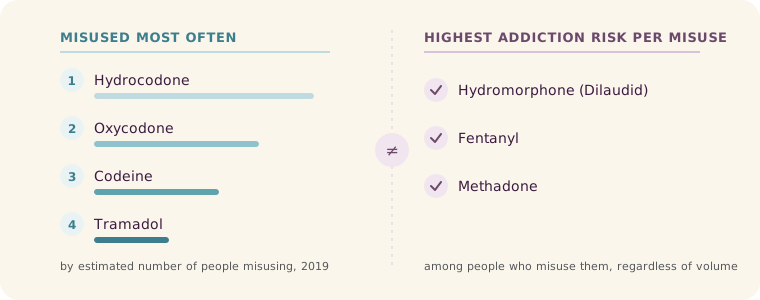
Research shows that 10.7% of U.S. adults aged 20 and over used one or more prescription pain medications in the past 30 days. In a national survey, hydrocodone, oxycodone, and codeine were the prescription opioids most commonly misused.
In this article, I explain why pain medication can be addictive, what the signs of addiction are, and how treatment supports lasting recovery.
What Are the Most Addictive Pain Medications?
Opioids carry the highest risk of addiction among pain medications. They are commonly prescribed after major surgery, for severe pain, and to manage opioid use disorder (OUD) itself.
The opioids most often prescribed—and among those most frequently misused—include:
- Hydrocodone (Vicodin)
- Oxycodone (OxyContin)
- Codeine
- Morphine
- Fentanyl (used in hospital settings for surgical and cancer pain)
- Hydromorphone (Dilaudid)
- Meperidine (Demerol)
Importantly, the opioids that are misused most often are not the ones most likely to cause addiction. More potent opioids, such as hydromorphone, fentanyl, and methadone, carry substantially higher rates of opioid use disorder among people who misuse them, while codeine and tramadol carry markedly lower rates.
One structured evidence review found that, across studies, roughly 3% of chronic pain patients developed a clear opioid addiction, while up to about 12% showed some aberrant drug-related behavior short of full addiction.
Not everyone who takes prescription opioids will become addicted. Factors such as personal and family history, prior substance use, genetics, dose, and duration of therapy all play a role. In fact, opioid addiction is genetically influenced, with heritability similar to that of diabetes, asthma, and cardiovascular disease.
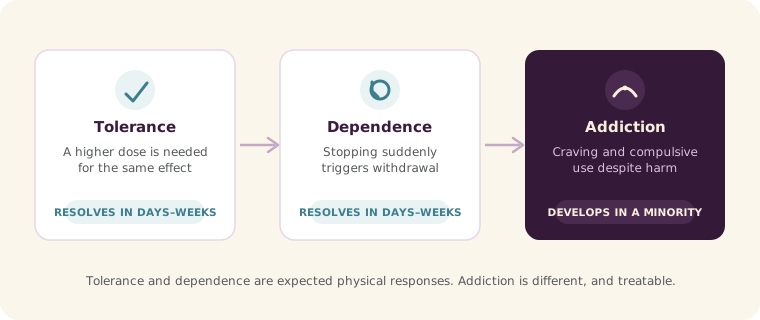
With repeated use over time, tolerance and physical dependence are nearly universal—but that is not the same as addiction. Tolerance means a higher dose is needed to achieve the same effect, which can increase overdose risk. Physical dependence means the body has adapted to the drug, so that abruptly stopping or sharply reducing it triggers withdrawal.
Tolerance and dependence are predictable, expected physiological responses to ongoing opioid use, and they resolve within days to weeks after the drug is stopped. Addiction, by contrast, develops in only a minority of people, evolves slowly, and involves craving, loss of control, and compulsive drug-seeking despite harm.
Physician-led detox & MAT
Two physicians on-site daily. We verify your insurance for free.
Why Is Pain Medication Prescribed If It's Addictive?
Opioids are a very effective form of pain relief. They bind to opioid receptors in the brain, spinal cord, and gut, blocking pain signals and changing how the brain interprets pain so it feels less intense. They also influence the brain's reward system, which contributes both to their pain-relieving effect and to their potential for misuse.
Unlike some other pain relievers that act at the site of injury, opioids act on multiple pathways in the central nervous system at once. For severe pain, such as burns and terminal cancer, no other class of oral analgesic matches their potency.
For opioid use disorder, medications for opioid use disorder (MOUD)—including buprenorphine, methadone, and naltrexone—are far more effective than abstinence-based or therapy-only approaches. Buprenorphine, in particular, has been shown to improve treatment retention, reduce illicit opioid use, and lower the risk of overdose death by more than half compared with no medication. (The term "medication-assisted treatment," or MAT, is still widely used for this approach.)
What Are the Signs of Addiction to Pain Medication?
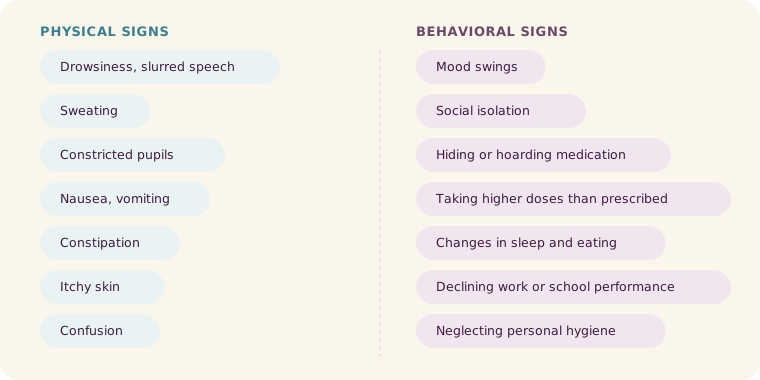
Pain medication addiction is rarely defined by a single symptom—it's usually a cluster of physical and behavioral changes signaling that something isn't right. These may include:
Serious, emergency warning signs of opioid overdose include very slow or shallow breathing, loss of consciousness, and unresponsiveness—the same signs that show up in overdoses from any opioid-like drug, including gas station heroin. If any of these occur, call 911 immediately; opioid overdose is life-threatening because it suppresses breathing.
One of the clearest signs of physical dependence is withdrawal when the dose or frequency is sharply reduced or stopped. Opioid withdrawal can include:
- Muscle and bone aches
- Abdominal cramps, nausea, vomiting, and diarrhea
- Runny nose, watery eyes, and yawning
- Dilated pupils, chills, and goosebumps
- Restlessness, anxiety, and irritability
- Insomnia
Opioid withdrawal is extremely uncomfortable but rarely life-threatening on its own, and its severity depends on the type, dose, and duration of opioid use. Symptoms can be minimized with a gradual taper or with medical support.
What Is Pain Medication Misuse?
Pain medication misuse means using medication in any way other than prescribed—for example, taking a higher dose, using it more often than directed, or combining it with other substances.
Misuse also includes taking pain medication without a prescription, using someone else's prescription, obtaining it from a non-medical source, or using it to get high. Manipulating the medical system to obtain pain medication is also considered misuse.
This behavior increases the risk of both dependence and addiction. Misuse is especially dangerous because it can be hidden behind a genuine need for pain relief, and combining opioids with other substances markedly raises the risk of fatal overdose.
Treatment for Pain Medication Addiction
Substance addiction in any form, even when it begins with a legitimate prescription, deserves treatment. From medical detox to residential care to outpatient programs, structured treatment offers a safe, sustained path to recovery.
Evidence-based therapies such as Cognitive Behavioral Therapy (CBT) address the thought and behavior patterns that fuel addiction, helping people recognize triggers and build coping skills. For opioid use disorder, medications that relieve cravings and withdrawal keep people in treatment and save lives; behavioral therapies are most effective when combined with these medications. Wellness activities help rebuild a healthy daily routine that supports whole-body healing.
Treatment for pain medication addiction is transformative for anyone who recognizes that their use has become unhealthy or harmful. Seeking help is not a sign of weakness—it's a step toward a fuller life.
Healing at Regain Hope Detox, Burbank, CA
Our team of certified clinicians at Regain Hope Detox provides expert, compassionate care for anyone struggling with pain medication addiction.
We offer a residential detox program to support people safely withdrawing from pain medication and other substances. The program includes individual and group therapy, non-narcotic Medication-Assisted Treatment such as naltrexone/Vivitrol, and wellness activities. We also have a dual diagnosis program for people facing addiction alongside a co-occurring mental health condition such as depression or anxiety (learn why treating both together matters).
We tailor our care to each person and work with both individuals and couples, serving Burbank, Los Angeles County, and Southern California. Care is available in English, Spanish, and Korean.
Hope is within reach. Regain yours today—contact our admissions team.
This article is intended for educational purposes only and should not replace personalized medical advice. If you believe you or someone else is experiencing a medical emergency, call 911 immediately.
Sources
- CDC/NCHS. (2020). Prevalence of Prescription Pain Medication Use Among Adults: United States, 2015–2018. NCHS Data Brief No. 369. cdc.gov.
- Han, B. et al. (2021). Trends in and Characteristics of Buprenorphine Misuse Among Adults in the US. JAMA Network Open.
- Mojtabai, R. et al. (2019). Misuse of prescribed opioids in the United States. Pharmacoepidemiology and Drug Safety.
- Fishbain, D. et al. (2008). What percentage of chronic nonmalignant pain patients exposed to chronic opioid analgesic therapy develop abuse/addiction and/or aberrant drug-related behaviors? A structured evidence-based review. Pain Medicine.
- Volkow, N., Koob, G., McLellan, A.T. (2016). Neurobiologic Advances from the Brain Disease Model of Addiction. The New England Journal of Medicine.
- Fields, H. (2011). The Doctor's Dilemma: Opiate Analgesics and Chronic Pain. Neuron.
- U.S. Department of Veterans Affairs / Department of Defense. (2021). Clinical Practice Guideline for the Management of Substance Use Disorders. healthquality.va.gov.
- Department of Health and Human Services. (2019). Pain Management Best Practices Inter-Agency Task Force Report. hhs.gov.
- Volkow, N., Blanco, C. (2023). Substance use disorders: a comprehensive update of classification, epidemiology, neurobiology, clinical aspects, treatment and prevention. World Psychiatry.
- Wakeman, S. (2020). Diagnosis and Treatment of Opioid Use Disorder in 2020. JAMA.