The Vivitrol Shot: How It Works for Alcohol and How Long It Lasts
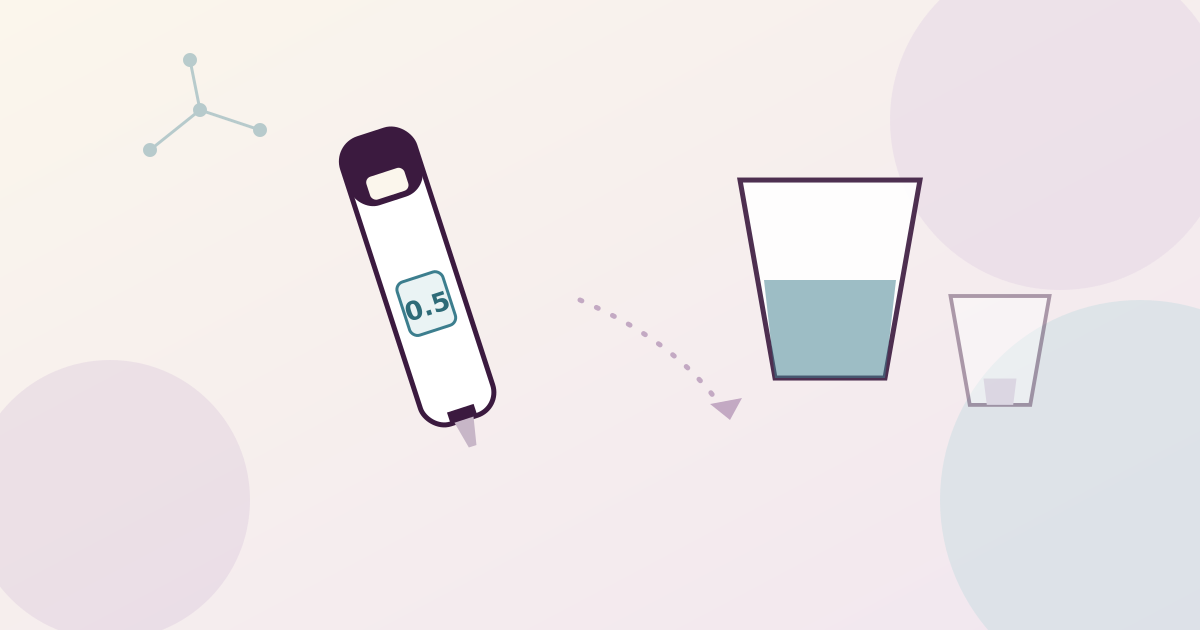
Vivitrol, also known as naltrexone, is a prescription medicine that helps treat alcohol dependence. It comes as an extended-release injection, meaning the medicine is slowly released in the body over a long period of time.
Alcohol use disorder (AUD) is one of the most common types of addiction in the U.S., and about 2.1 million people with AUD received treatment in 2024 [1]. Care is effective, and it’s possible to fully heal from AUD, but the recovery journey can be uncomfortable and challenging. Vivitrol is a medicine that helps lower cravings for alcohol, improving a person’s chances of staying sober, finishing treatment, and making long-term change.
What Is the Vivitrol Shot?
Vivitrol is the brand name for naltrexone, an opioid antagonist. It’s used in treatment for alcohol and opioid dependency to prevent the feeling of a euphoric high and reduce cravings. For these uses, it’s approved by the U.S. Food and Drug Administration (FDA).
Vivitrol is a prescription medicine and is only available from, and administered by, a licensed physician. It’s given through an intramuscular injection once a month. Once Vivitrol is in the body, it can’t be removed.
Vivitrol is a type of medication-assisted treatment (MAT) for addiction, and research shows it helps decrease heavy drinking among people with alcohol dependence [2]. It’s not a standalone treatment for alcohol or opioid addiction, though—Vivitrol works as part of a broader treatment plan that includes psychotherapy and wellness activities.
Physician-led alcohol treatment
Physicians on-site daily. We verify your insurance for free.
Who Is the Shot For?
Anyone receiving treatment for AUD or opioid addiction can be a candidate for Vivitrol. A doctor should still conduct an assessment and review a person’s treatment history and plan before approving it.
Some people shouldn’t use this medication, including anyone:
- Using opioid-containing medicines or illicit opioids
- Experiencing alcohol or opioid withdrawal symptoms
- Allergic to naltrexone or any of the ingredients in Vivitrol or the liquid used to mix it
Access to Vivitrol isn’t always equal, either. Among Medicaid patients treated for opioid use disorder, one study found non-Hispanic Black, non-Hispanic American Indian/Alaska Native/Asian/Hawaiian/Pacific Islander, and Hispanic patients were all significantly less likely to receive Vivitrol than non-Hispanic White patients [3].
How Does the Vivitrol Shot Work?
Vivitrol can only be given once a person has fully detoxed from alcohol and hasn’t had a drink for 7–10 days.
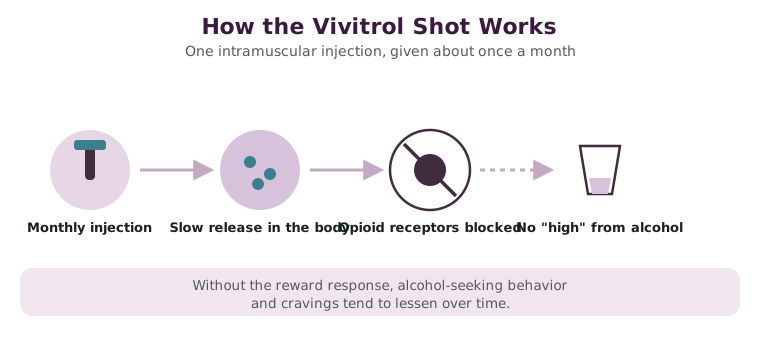
Because Vivitrol is an opioid antagonist, it binds to opioid and reward receptors in the brain. If a person drinks alcohol while on Vivitrol, it can’t attach to those receptors and produce pleasurable feelings. Without the “high,” people are less likely to repeat alcohol-seeking and using behaviors. Over time, the blocked receptors help diminish cravings and lower the risk of relapse.
Vivitrol supports the physical element of recovering from AUD. Psychotherapy, such as cognitive behavioral therapy (CBT), is still necessary alongside Vivitrol to address mental challenges, including processing the trauma underneath addiction and reframing negative thought patterns.
How Long Does Vivitrol Last?
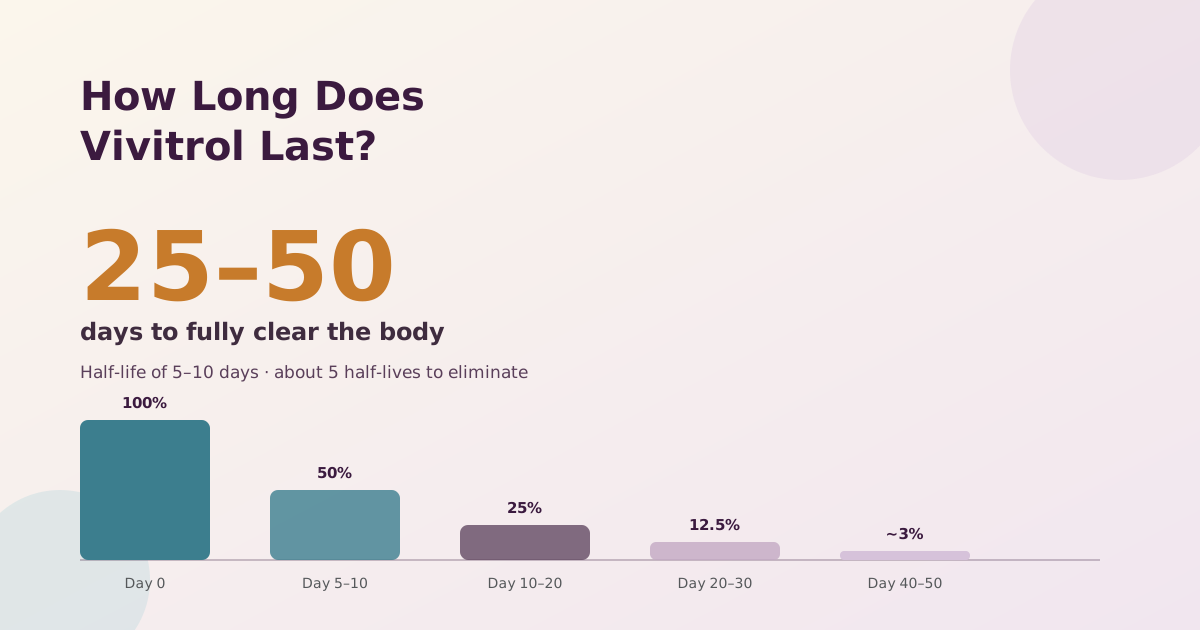
Vivitrol typically comes as a 380 mg intramuscular injection given every four weeks (28–30 days) to maintain its effects. How long it lasts depends on how quickly the body breaks down the slow-release formula, which varies from person to person.
The half-life of Vivitrol—how long it takes to break down to half the original amount in the body—is 5–10 days. It generally takes about five half-lives for a drug to be fully eliminated, so Vivitrol clears the body in roughly 25 to 50 days [4].
Are There Side Effects of the Vivitrol Shot?
Common side effects of Vivitrol include nausea, sleepiness, headache, dizziness, vomiting, decreased appetite, painful joints, muscle cramps, cold symptoms, trouble sleeping, and toothache. In most cases, these symptoms improve within a few days and don’t repeat with future doses.
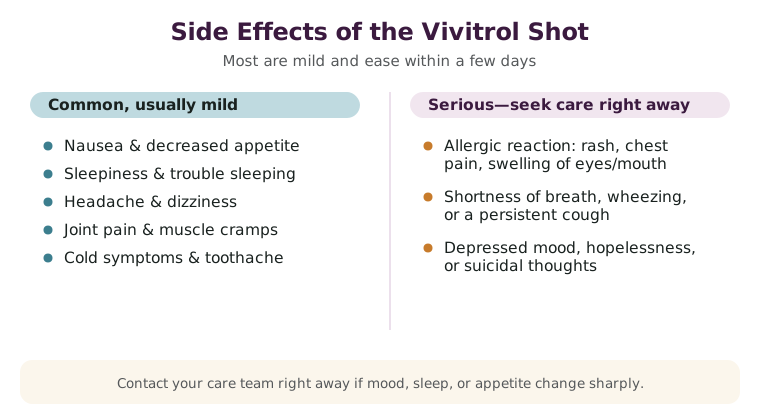
More serious side effects include an allergic reaction that may trigger pneumonia—warning signs are shortness of breath, wheezing, or a persistent cough. Signs of other allergic reactions include a skin rash, chest pain, feeling faint, and swelling of the eyes, mouth, or tongue. Contact a medical professional immediately if you experience any of these.
Depressed mood, suicidal thoughts, and suicidal behavior are also possible. One study found people taking Vivitrol were about twice as likely to experience depressed mood as the placebo group [2]. Contact your care provider if you’re sleeping much more or less than usual, feel hopeless, are angry or irritable, notice appetite changes, or can’t concentrate.
Vivitrol as Part of Comprehensive Care for AUD
Vivitrol can be an important stage of treatment for alcohol addiction, but it works best as part of a wider, comprehensive care plan. Evidence-based therapies such as CBT and dialectical behavior therapy (DBT) address the past experiences and thought patterns that fuel addiction, and teach healthier coping skills to sustain recovery.
Wellness activities support physical, mental, and spiritual healing alongside medication. Yoga, mindfulness, meditation, and creative therapies like art and music therapy help people express themselves in new ways, connect more meaningfully with others, and build self-esteem.
Combined, these approaches—plus Vivitrol, when appropriate—support more complete healing. If naltrexone in its daily oral form is a better fit for someone’s situation, that version has its own considerations worth understanding too.
Alcohol Use Disorder Recovery at Regain Hope Detox, Burbank, CA
We’re a physician-led detox and residential center helping people overcome addiction and co-occurring mental health conditions one day at a time. Our medically supervised detox program supports you as you withdraw from alcohol and find stability. We also offer a residential program where you stay with us after finishing detox and receive intensive care as you prepare to return to daily life.
We offer monthly Vivitrol injections, where clinically needed, as part of our residential care. Our programs also include daily visits from a physician, evidence-based therapies such as CBT, and home-cooked meals.
We serve individuals and couples, and our care is available in English, Spanish, and Korean.
Hope is within reach. Regain yours today—contact our admissions team.
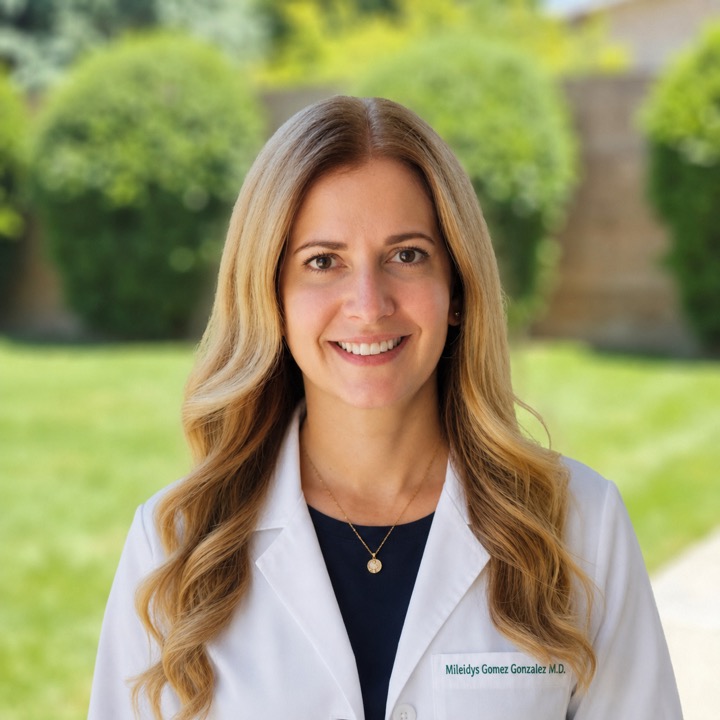
Dr. Mileidys Gomez Gonzalez is a physician specializing in addiction medicine and medical detoxification. She serves as Medical Director of Regain Hope Detox and Recovery Center in Burbank, California.
This article is intended for educational purposes only and should not replace personalized medical advice. If you believe you or someone else is experiencing a medical emergency, call 911 immediately.
Sources
- National Institute on Alcohol Abuse and Alcoholism. (2024). Alcohol Treatment in the United States. niaaa.nih.gov.
- Johnson, B. (2007). Naltrexone long-acting formulation in the treatment of alcohol dependence. Therapeutics and Clinical Risk Management.
- Dunphy, C. et al. (2023). Racial–Ethnic Disparities of Buprenorphine and Vivitrol Receipt in Medicaid. American Journal of Preventive Medicine.
- Drugs.com. (2025). How long does Vivitrol last in your system? drugs.com.